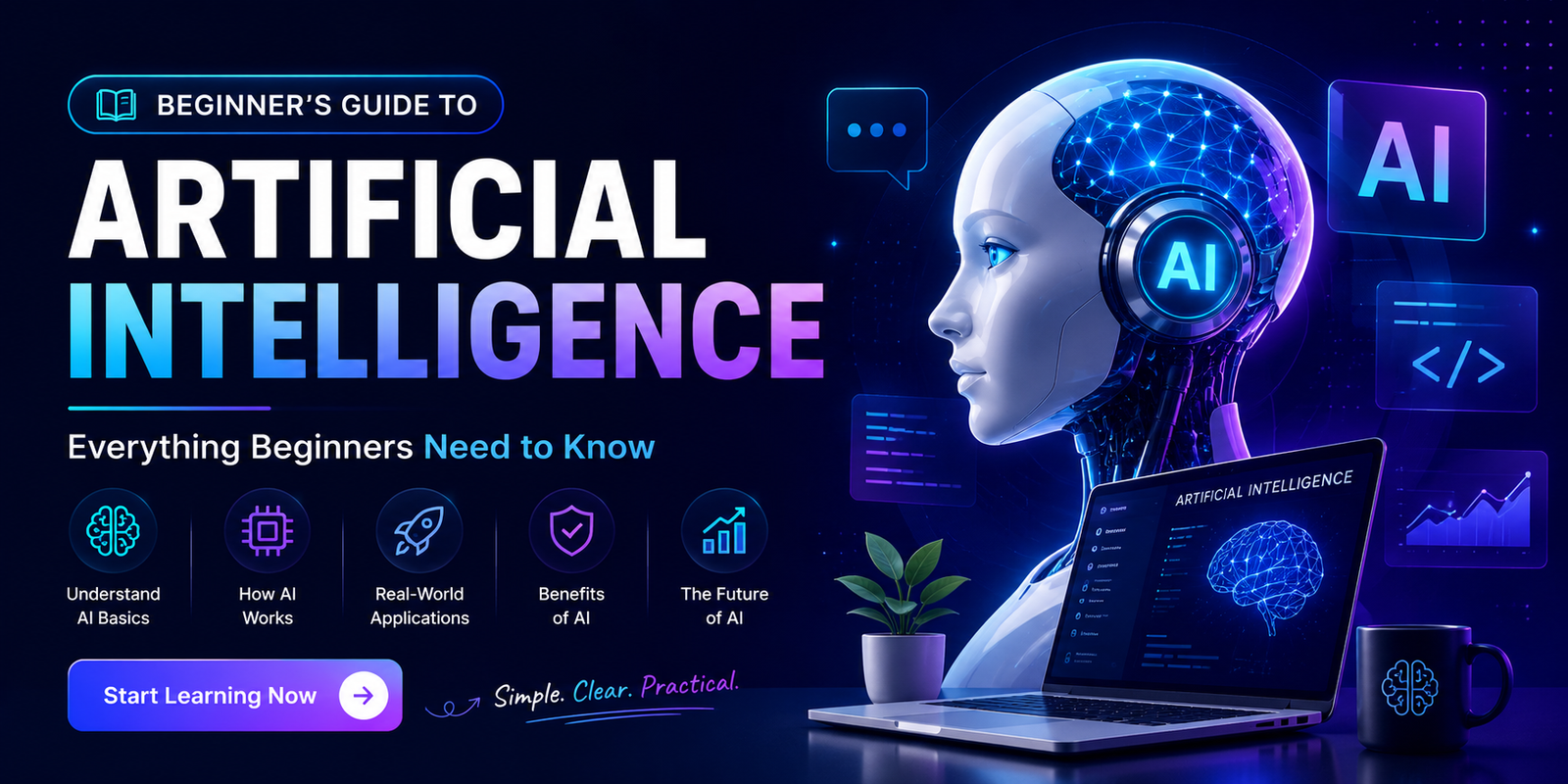
Artificial Intelligence Guide: Everything Beginners Need to Know
Introduction
Artificial Intelligence (AI) is one of the fastest-growing technologies in the world today. From voice assistants and chatbots to self-driving cars and personalized recommendations, AI is transforming how we live and work. This Guide will help beginners understand what AI is, how it works, its common applications, and why it has become an essential part of modern technology.
What Is Artificial Intelligence?
Artificial Intelligence is a branch of computer science that enables machines to perform tasks that typically require human intelligence. These tasks include learning, problem-solving, understanding language, recognizing images, and making decisions.
This Guide explains that AI systems use data and algorithms to learn patterns, improve over time, and provide accurate results without needing constant human intervention.

Types of Artificial Intelligence
AI can be categorized into different types based on its capabilities.
Narrow AI
Narrow AI is designed to perform specific tasks, such as voice recognition, language translation, or recommending products online. Most AI applications available today fall into this category.
Super AI
General AI is a theoretical form of AI that would be capable of performing any intellectual task a human can do. Although researchers continue to explore this area, it has not yet been achieved.
General AI
Super AI refers to a future concept where machines surpass human intelligence in every field. This remains a topic of research and speculation.
Common Applications of AI
Artificial Intelligence is used across many industries to improve efficiency and solve complex problems.
Some common applications include:
- Virtual assistants like Siri and Google Assistant
- Online shopping recommendations
- Healthcare diagnostics
- Fraud detection in banking
- Customer service chatbots
- Self-driving vehicles
- Smart home devices
These applications demonstrate how AI is becoming a part of our daily lives.
Benefits of Artificial Intelligence
AI offers several advantages for businesses and individuals, including:
- Faster data analysis
- Increased productivity
- Improved decision-making
- Better customer experiences
- Automation of repetitive tasks
- Reduced human error
Following this Guide can help beginners understand how AI improves efficiency and supports innovation across different industries.
Challenges of Artificial Intelligence
Despite its benefits, AI also presents several challenges.
These include:
- Data privacy concerns
- Bias in AI models
- Job automation
- Ethical considerations
- Security risks
Developers and organizations continue working to make AI systems more transparent, fair, and secure.
Why Artificial Intelligence Matters
Artificial Intelligence is changing the future of technology by helping businesses make smarter decisions, improving healthcare, enhancing education, and creating more personalized digital experiences. As AI continues to evolve, learning its basics has become valuable for students, professionals, and businesses alike.
This Guide encourages readers to explore AI responsibly and understand both its opportunities and challenges.
Conclusion
Artificial Intelligence is no longer just a concept of the future—it is already shaping the world around us. By understanding the Fundamentals of AI, its different types, practical applications, and potential challenges, beginners can better appreciate how this technology is transforming industries and everyday life. This Guide provides a strong starting point for anyone looking to learn about one of the most important technologies of our time.

Recent Comments